
About These Hazards
The Pocket Guide explains the main hazards found on solar farm construction sites, how injuries can happen, and the key safety issues workers need to understand. A hazard is anything that can cause harm. A risk is the chance that someone could be hurt by that hazard and how serious that harm could be.
Use this page to get a quick overview of the main hazard topics. Then go to the relevant fact sheet or resource for more detail.
Hazard Overview
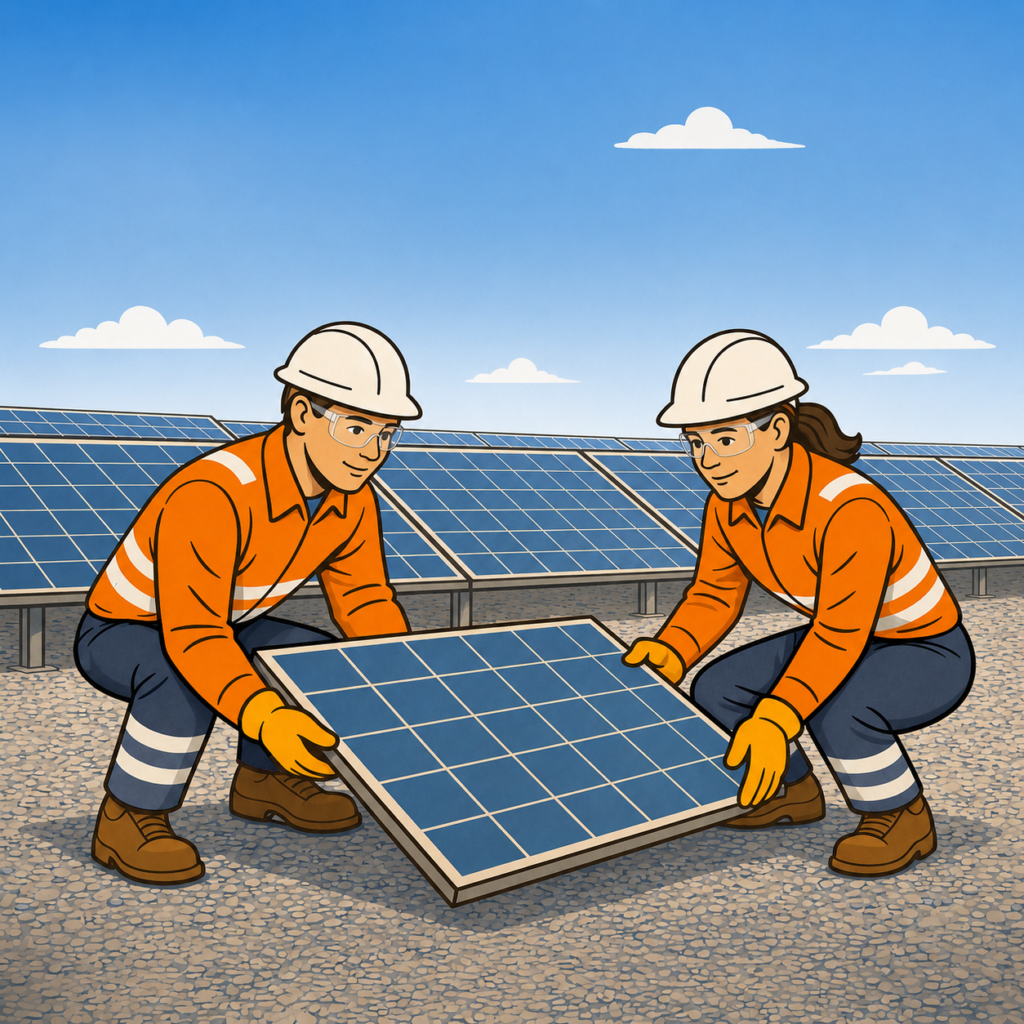
Manual Handling
Manual handling includes lifting, carrying, pushing, pulling or holding objects. On solar farm projects this can include panels, tubing, racking components and cables. These tasks can lead to strains, sprains, muscle tears and other injuries, especially where loads are awkward, repetitive or handled in poor conditions.
Mobile Plant
Mobile plant includes equipment such as telehandlers, cranes, graders, piling rigs, trucks and cable-laying machines. On busy solar farm sites, moving plant and limited visibility can create serious risks for both operators and pedestrians. These risks can include crush injuries, collisions, rollovers and amputations.
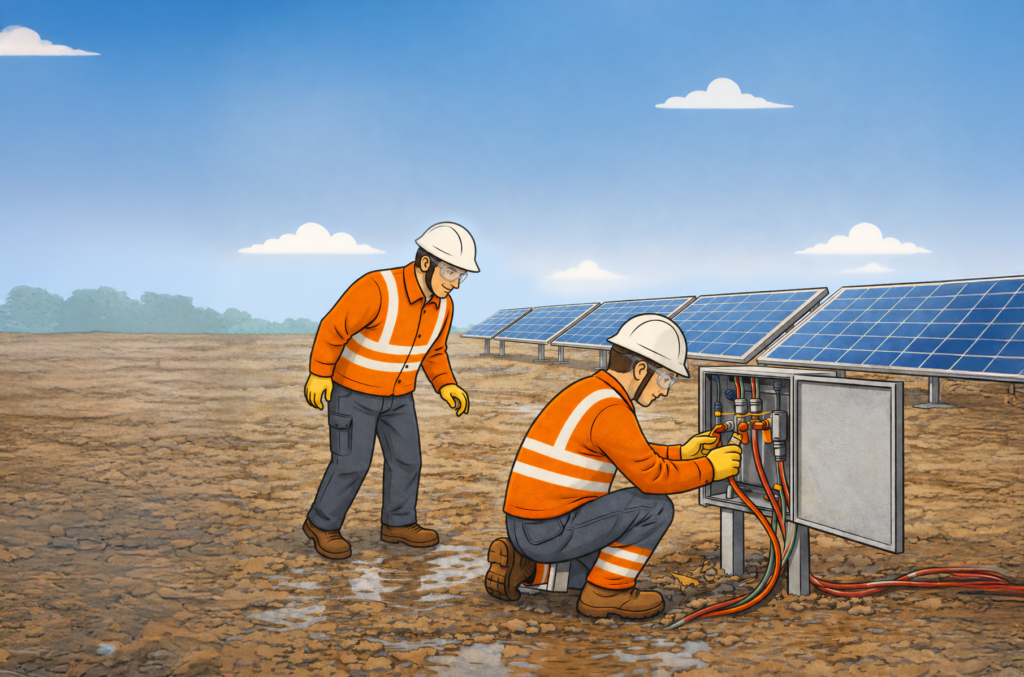
Electrical
Electrical hazards involve exposure to live electricity, damaged equipment or unsafe work near energised systems. During construction and commissioning, some areas and systems may remain live. Electrical incidents can cause shock, burns, arc flash injuries and secondary injuries such as falls.
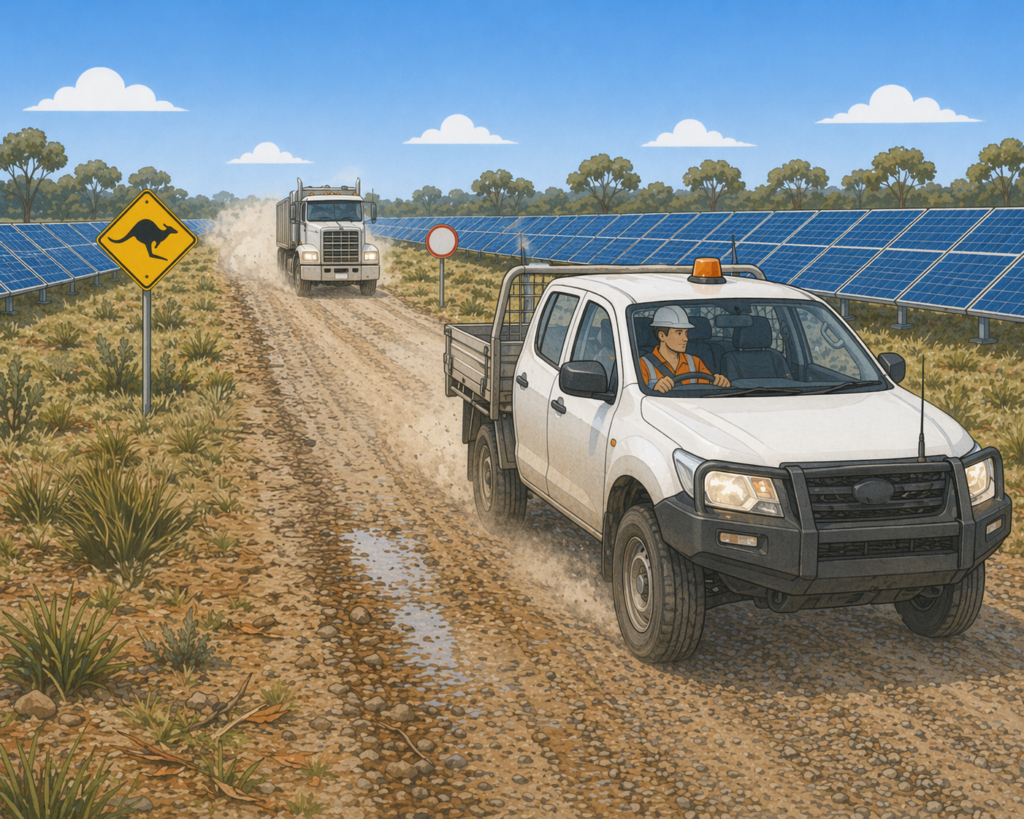
Driving & Traffic
Driving on and around solar farms can involve long travel distances, rural roads, fatigue, wildlife and high vehicle movement between work areas. These hazards can lead to rollovers, collisions and other serious vehicle incidents.
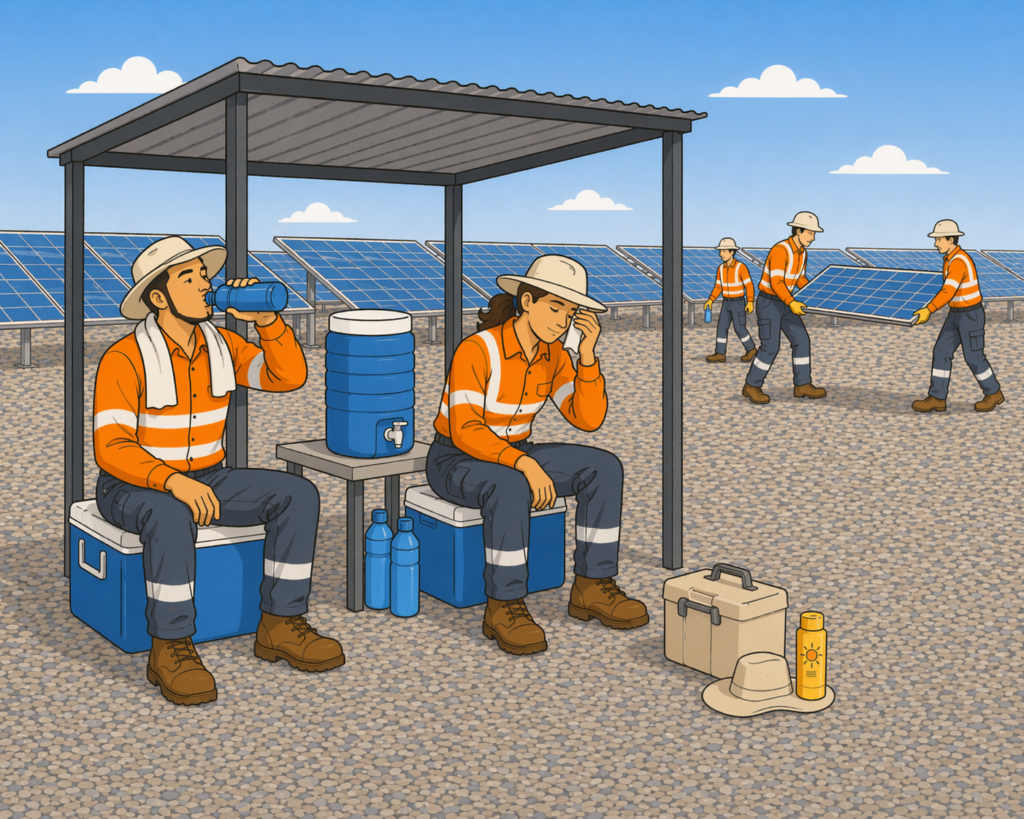
Heat Stress
Heat stress happens when the body cannot cool itself properly. Solar farm construction often involves long periods outdoors in high temperatures, direct sunlight and reflective conditions. Heat stress can lead to dehydration, exhaustion, heat stroke, fatigue and reduced concentration.
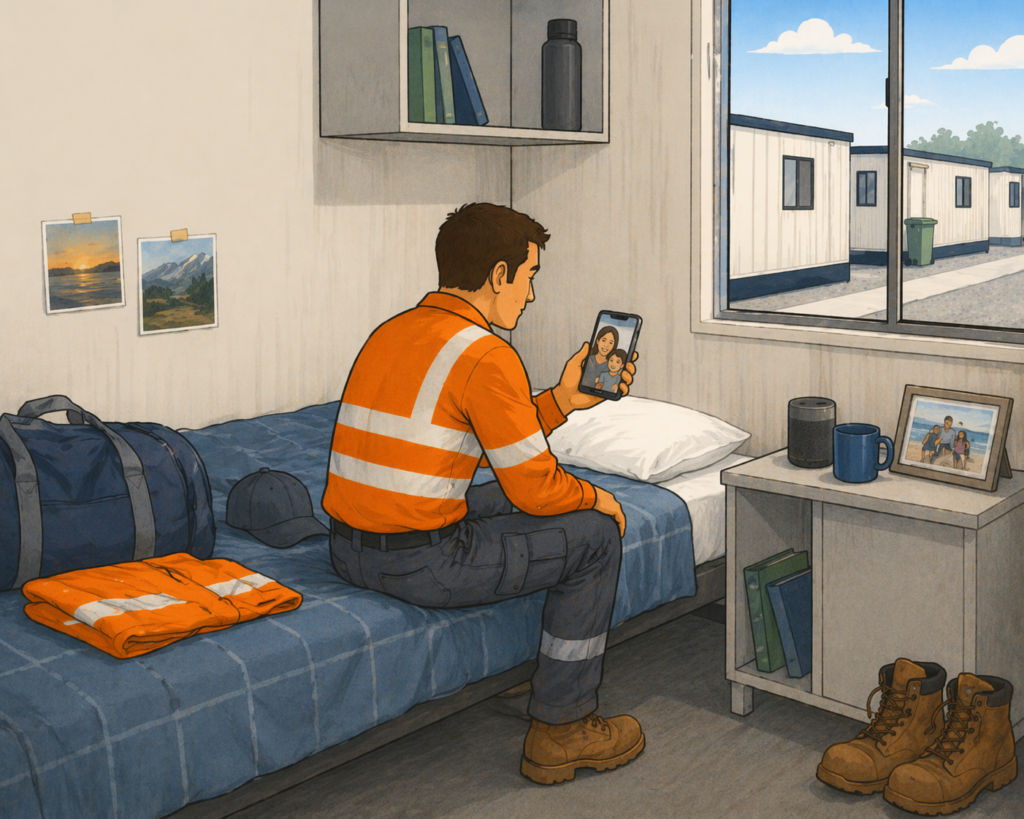
Psychosocial
Psychosocial hazards can affect mental health and wellbeing. On solar projects these can include long rosters, fatigue, social isolation, poor support, conflict on site or stress linked to remote work and camp living. These issues can affect sleep, concentration, mood and safe decision-making.
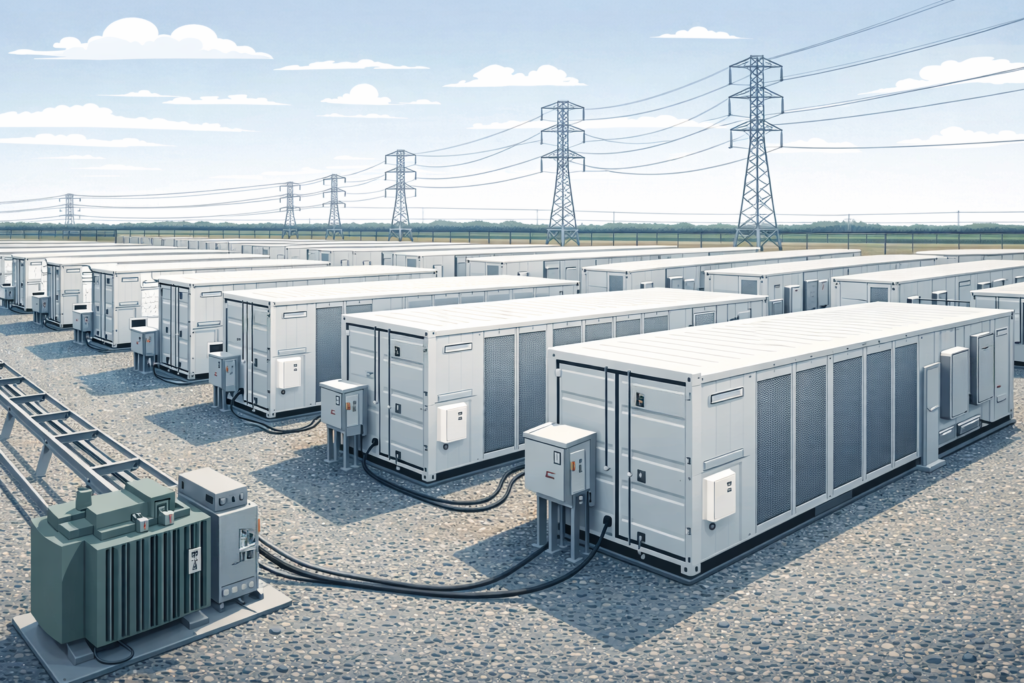
Substations & BESS (Battery Energy Storage Systems)
Substations and BESS areas contain high-voltage equipment used to convert, manage and store power. These areas can become live during construction and commissioning. Hazards in these areas can include electric shock, burns, fire, explosion and toxic smoke if a battery fails or catches fire.
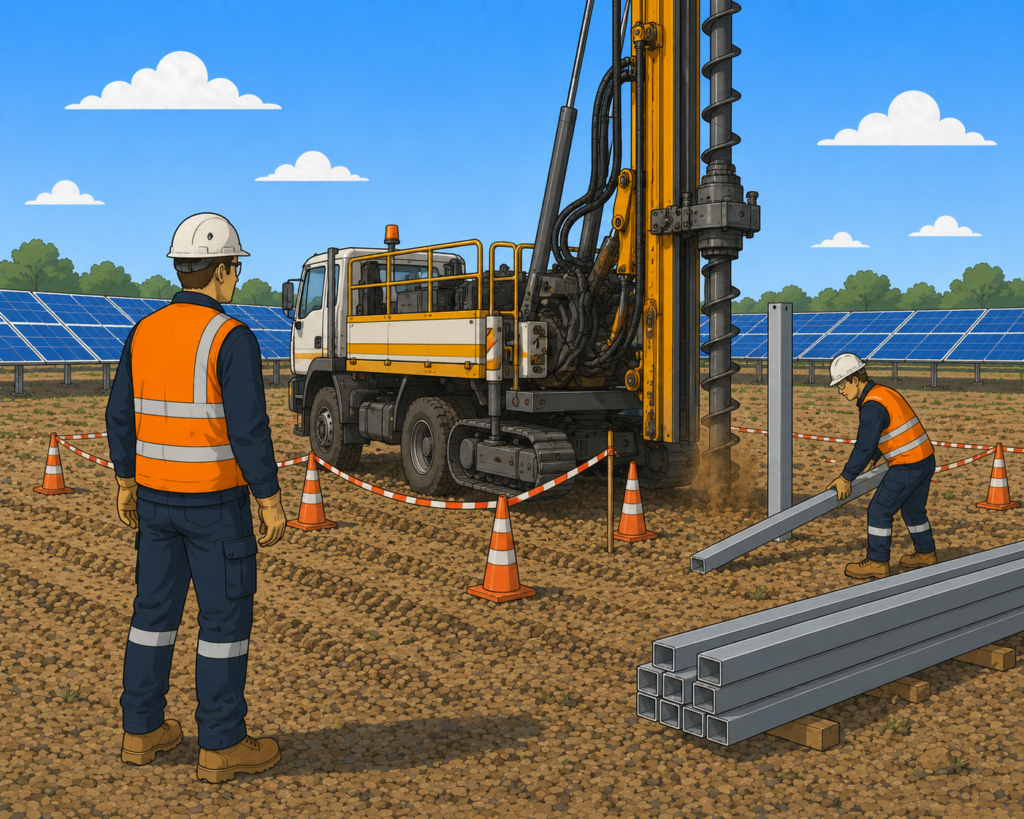
Drilling & Piling Operations
Drilling and piling are used to install the foundations that support solar farm structures. This work involves large rigs, heavy steel piles, moving equipment and repetitive physical tasks. Hazards can include crush injuries, struck-by injuries, entanglement, hearing damage and slip or trip hazards on uneven ground.
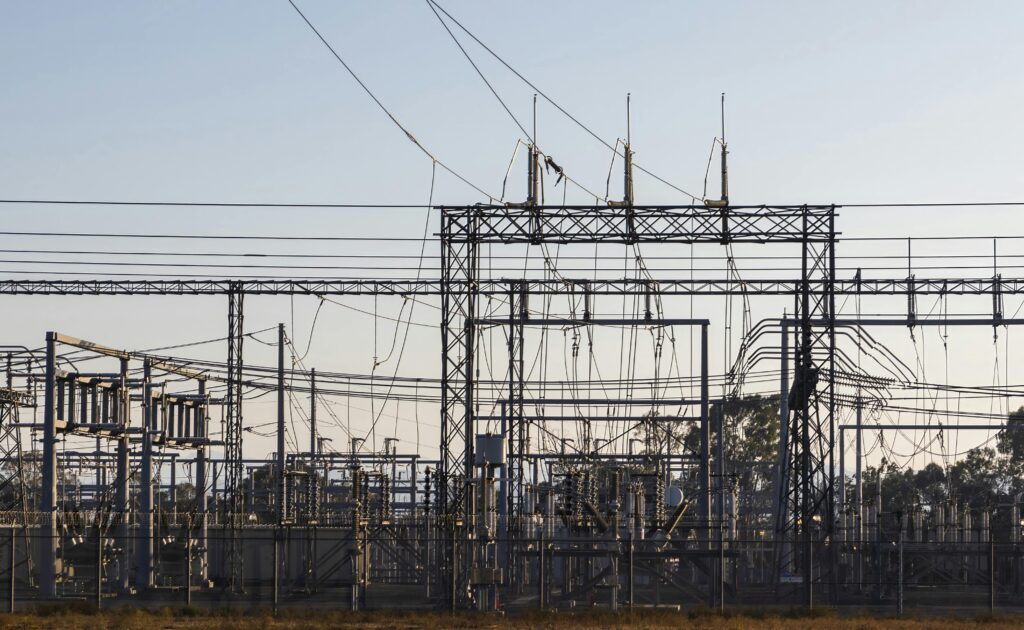
Overhead Powerlines
Overhead powerlines carry high-voltage electricity and can cause severe injury or death if workers, tools or equipment come too close. Electricity can arc through the air, so direct contact is not always needed for a serious incident to occur. This hazard is especially important when using plant, lifting long materials or working in poor visibility.
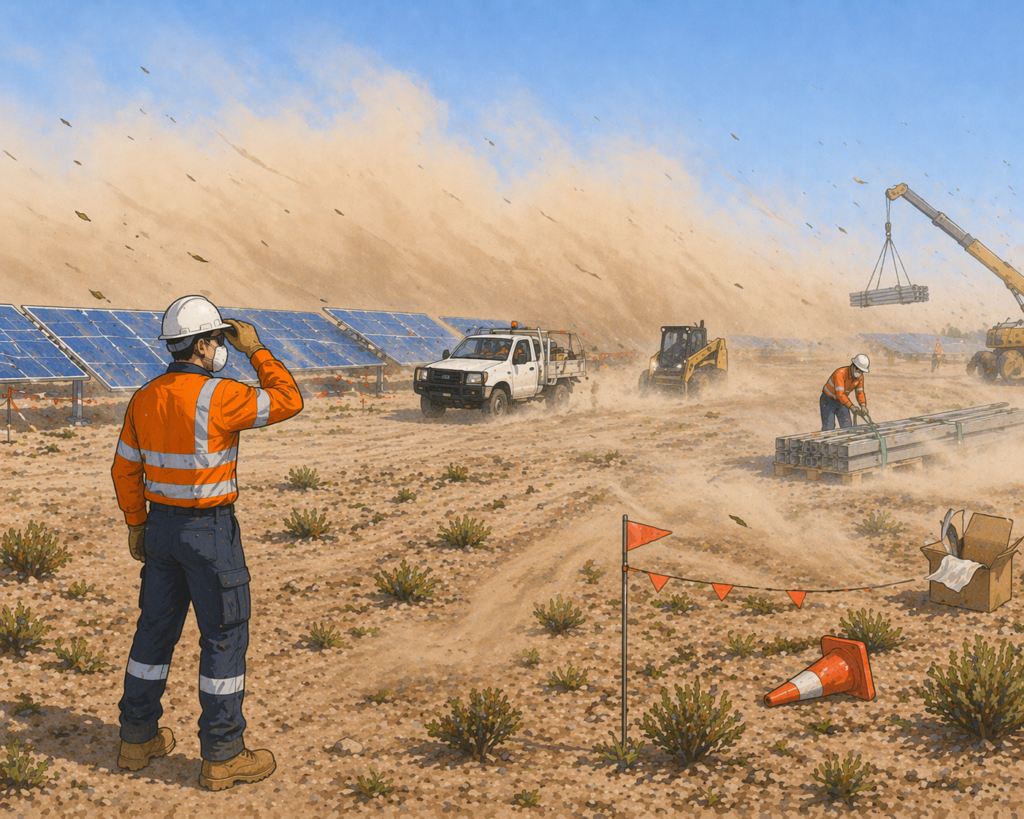
Wind & Dust
Strong wind, dry ground and disturbed soil can create airborne dust, reduce visibility, move unsecured objects and affect lifting or plant operation. These conditions can lead to eye injuries, breathing irritation, slips, trips, falls and loss of control of loads or tools.
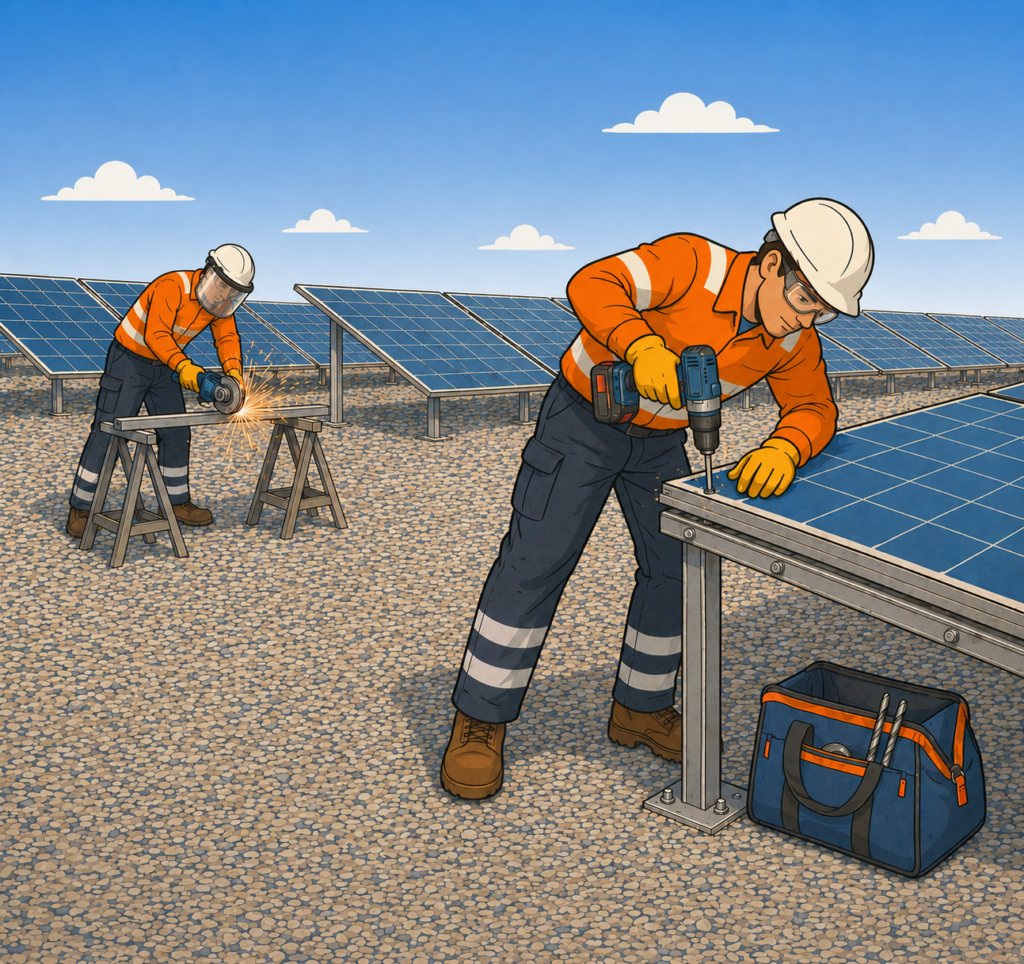
Power Tools
Power tools such as drills, grinders, impact drivers, saws, crimpers and torque tools can cause cuts, eye injuries, electric shock, hearing damage and vibration-related harm. Risks can increase on solar farm sites because of repetitive work, uneven ground, weather exposure and worker fatigue.
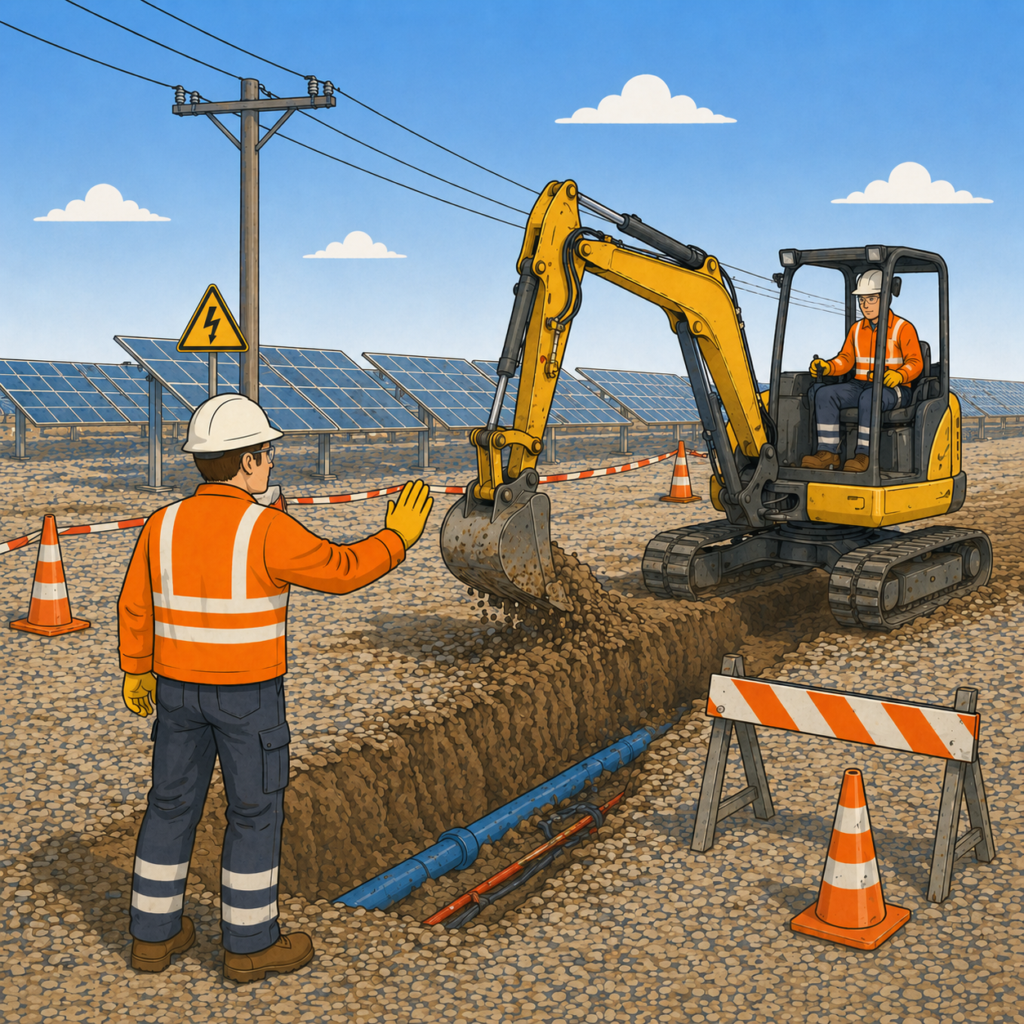
Contact with Assets
Contact with assets means striking, damaging or coming too close to overhead or underground services such as powerlines, electrical cables, water mains, gas lines, communications cables or fibre infrastructure. These incidents can cause electrocution, burns, fire, explosion, flooding, service disruption and major project delays
This page provides a general overview of common hazards in large-scale solar farm construction. Always follow site-specific procedures, inductions, permits, signage and supervisor direction.